This article co-authored by Ron Healy, ePAL Global, and Rod Talbot, Hurricane Commerce
The customer refused the parcel. Customs had already accepted it. And the tax man has your money. Now what?
There is a point in cross-border eCommerce where a perfectly ordinary customer-service problem acquires an international administrative career that would make a Brussels bureaucrat weep with admiration. Returning a cross-border purchase is one of those points, despite being a routine part of online retail. The European Environment Agency estimates that around one in five garments bought online in Europe is returned. That’s quite a lot of administrative careers.
From the merchant’s perspective, the story is straightforward. You sold a jacket. The customer doesn’t want it. The jacket comes back, the money goes back and everyone returns to approximately where they started, minus some postage and enthusiasm.
Unfortunately, the border does not have a “restore previous version” option.
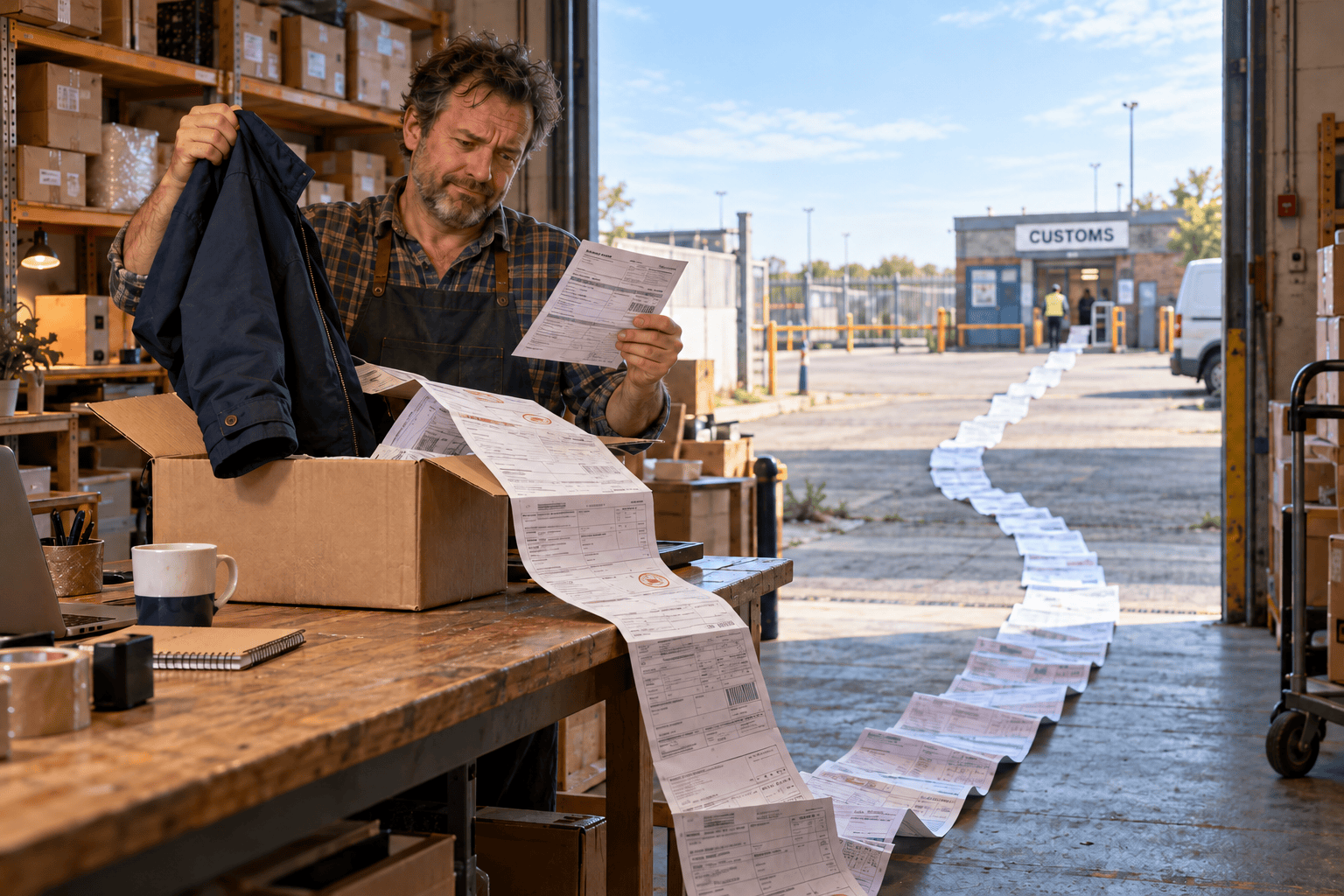
Sure, your shop can reverse the sale and your courier can reverse the journey. Neither action automatically reverses what the tax man and the Customs authorities picked up when the goods crossed the border. This is how you end up with a reversed sale, a jacket travelling home and a tax record that considers the original trip a perfectly successful piece of business, despite the fact that you had to give the money back and may also have to pay for both the outward and return shipping – not to mention tax on shipping.
It was never delivered but it was still imported.
Imagine a parcel arriving into the EU from outside. The courier handles Customs clearance and advances the import charges. Later, the customer is asked to pay those charges before receiving the parcel, discovers the purchase has become rather more expensive than expected and refuses it.
The merchant’s tracking screen says: “delivery refused”. The customer says: “I never received it” (maybe with some swear words on Trustpilot). Both are correct.
But if the goods have already been released for free circulation (that’s Customs-speak for “it’s cleared to circulate in the EU now”), the Customs authority has a correct answer – for them: the import happened.
These are different milestones. Customs clearance is not waiting for a photograph of the customer smiling beside the parcel. A delivery failure does not establish that the goods were never imported or cancel a completed import. The import happened, even if the delivery didn’t.
The jacket can therefore have entered the country without ever entering the customer’s wardrobe. It has achieved international circulation and failed to achieve a coat hanger. And the merchant now has to work out which event actually needs undoing.

The refund button is impressively local.
You do the sensible customer-service thing and issue a refund. A few clicks, a confirmation email and the payment is on its way back. Your dashboard may even turn the order a reassuring colour. But that colour isn’t integrated into Customs’ systems.
Recovering import charges is a separate problem to recovering the jacket. Was a refund available on a regulatory basis, or because of faulty goods, or “just because”..? Who paid the charges? Who handled the declaration? Can I claim back the tax and duty I paid to send the goods to the customer? What about the tax I paid to the shipper to get them back? And is there Customs duty on the way back? What evidence is needed? Which deadline applies? Every one of those questions is answered by data, and most of that data was created (or should have been) when the jacket first crossed the border.
No wonder many merchants just say: “Forget it… not worth the headache”. And no wonder there are “Returns specialists” who handle all those headaches on their behalf (there’s always a specialist whenever there are enough headaches, thankfully).
In Ireland, Revenue’s guidance directs consumers seeking relevant Customs refunds back to the courier or postal operator that processed the import formalities. So the customer may be talking to the merchant while the merchant is talking to the carrier, which is working from a declaration the customer has never seen. Everyone is discussing “the refund”. They may be discussing different money.
“Refund customer” is a button. “Undo the border” is a process. Giving them the same name in your spreadsheet does not make them the same operation. And “reclaim tax & duties” just seems such an obvious time-sink that it soon gets demoted to “maybe when I have nothing better to do”, even when there is enough money involved to make checking worthwhile.
The jacket comes home. The €3 settles in.
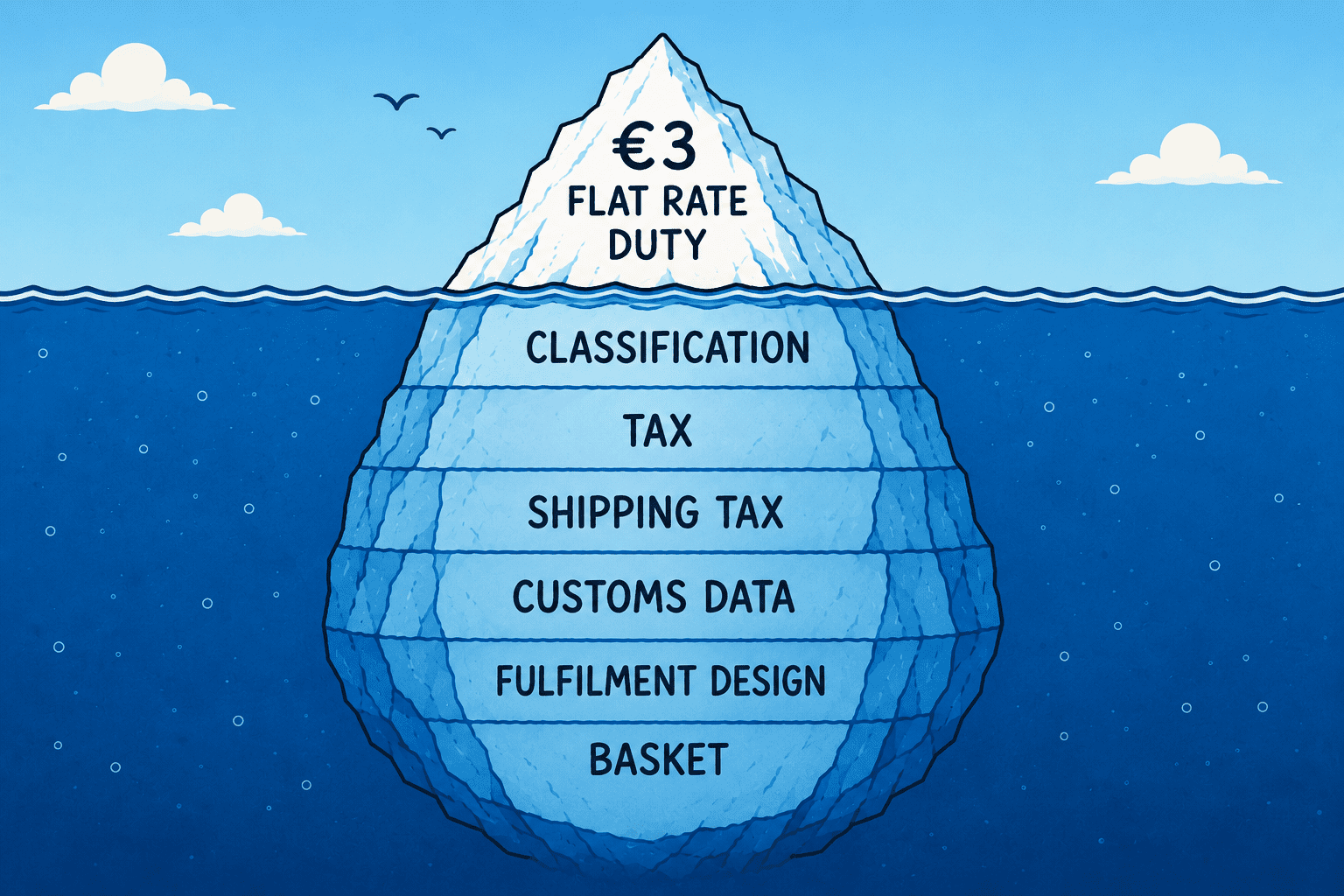
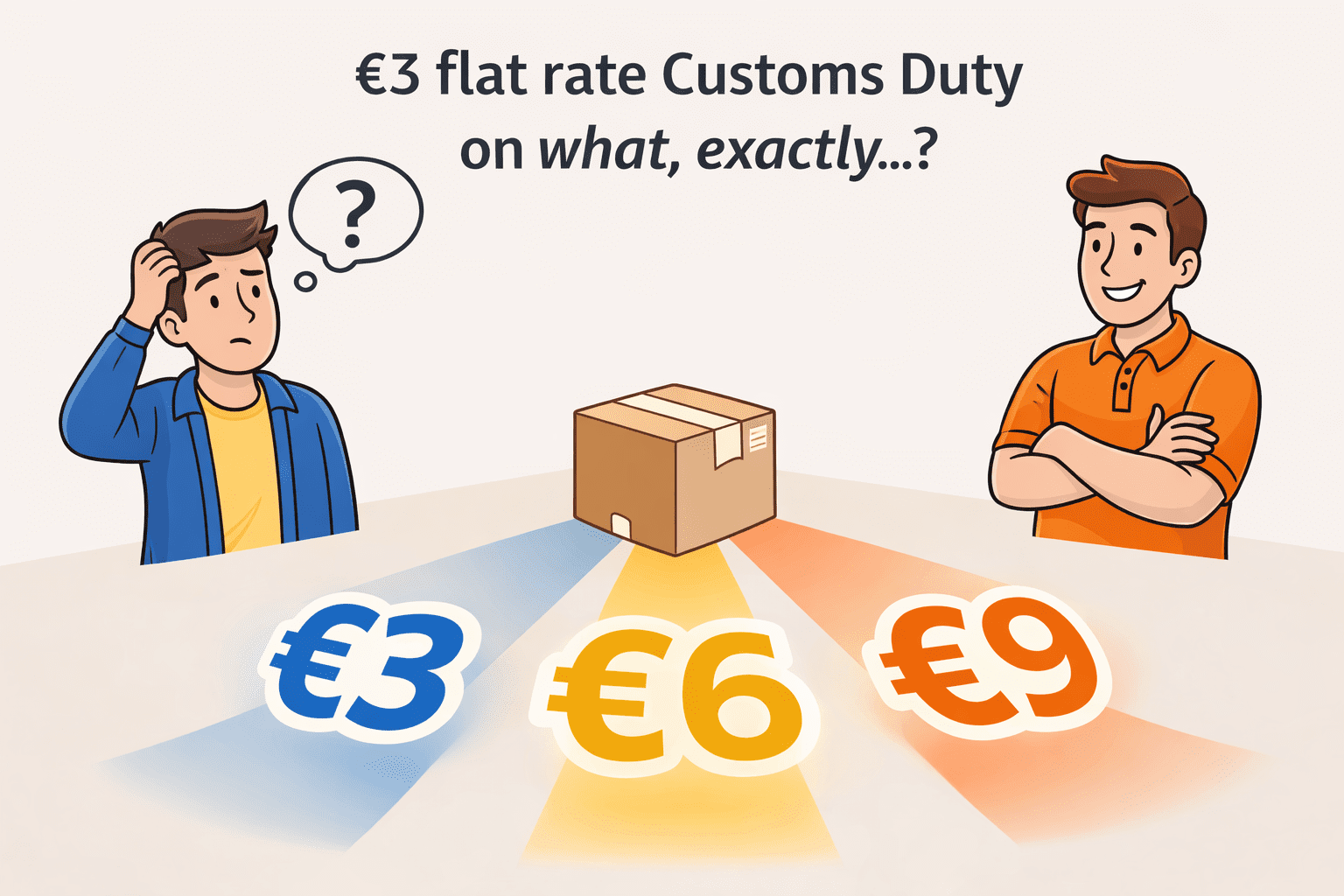
Now take a qualifying low-value online purchase imported into the EU under the €3 “flat rate but not quite flat rate” Customs duty regime, applying since July 2026. The customer changes their mind and returns the goods to the supplier.
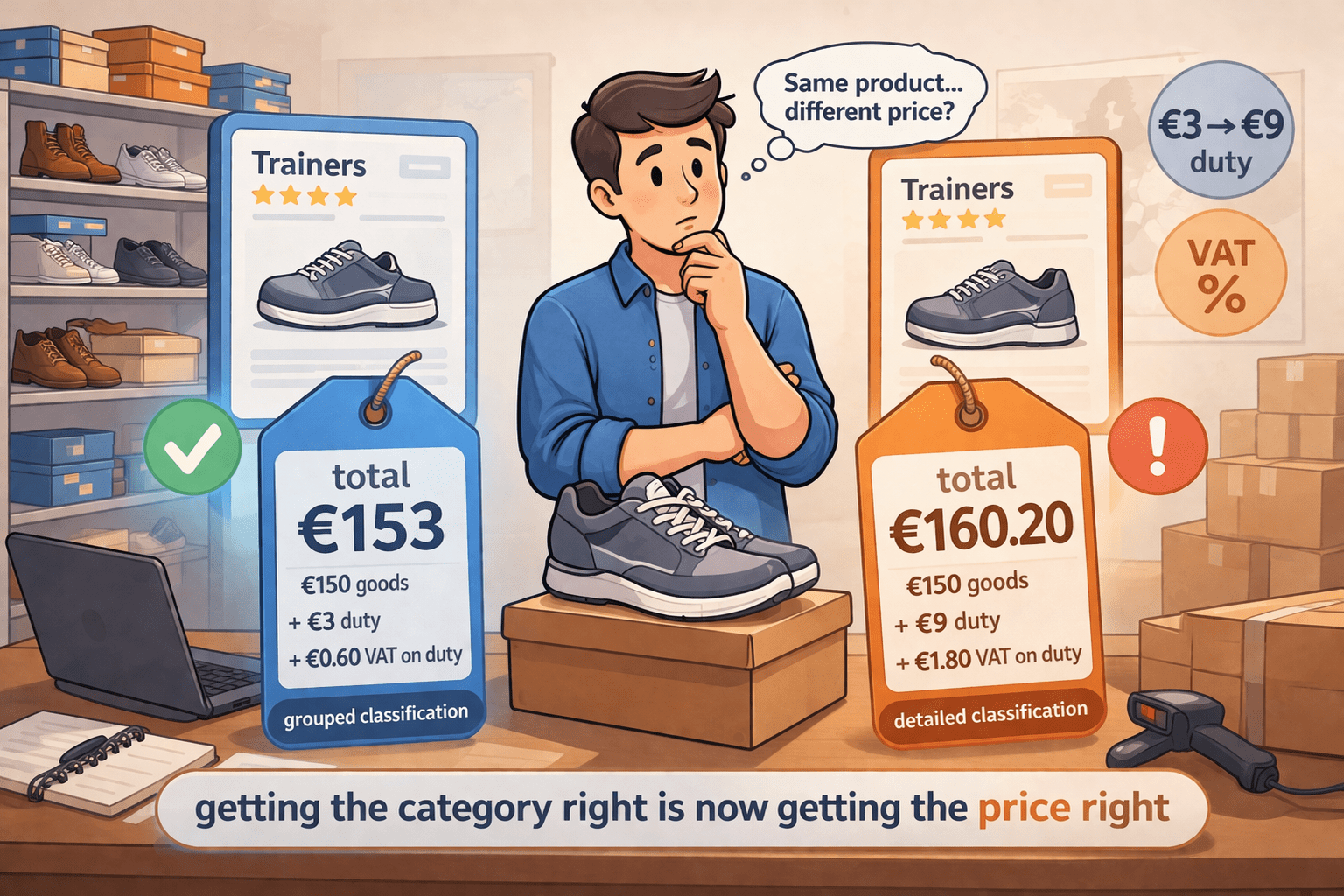
The product leaves. For that change-of-mind return, the €3 Customs duty does not come back from Customs. It’s gone. Goods that were faulty or did not match the contract when released can be a different story, if the refund conditions are met. “The zip is missing” and “I’ve decided I prefer blue” may lead to the same warehouse shelf, but they are different Customs stories. And knowing which story you’re in starts with knowing exactly what was declared, under which classification and why.
The returns policy on your website and the returns policy at the border have clearly never been introduced.
Yes, the jacket that attracted the charge can go home while the charge stays behind. The jacket has a return label. The €3 has a new home. And let’s not forget any VAT on that €3. That needs its own refund check too. Because apparently one headache wasn’t enough.
Complicated? I use “Solpadeine” for those kinds of headaches.
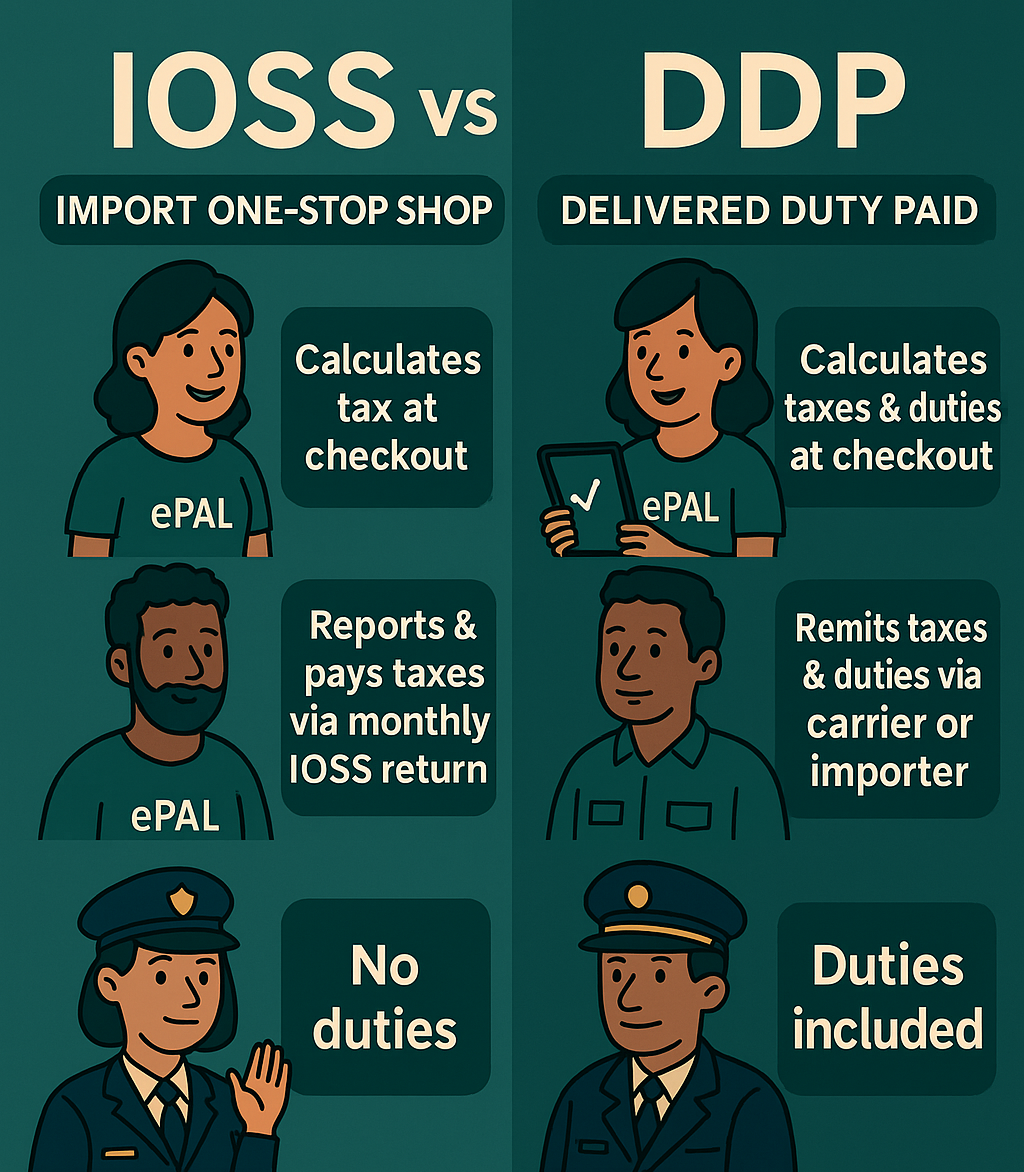
VAT needs its own conversation too. VAT collected by the seller at checkout, for example through IOSS, can be refunded through the seller. VAT charged on import has a separate recovery question. Refunding the seller-collected VAT does not establish that Customs will refund the duty, or that import VAT has also been recovered.
One returned jacket, several pots of money and they didn’t book the journey together.
A return label is not a passport.
The problem works in the other direction too. If you are an EU merchant receiving a jacket back from a customer outside the EU, that jacket is crossing into the EU again. You recognise it. You packed it last week. It still has your label and possibly your carefully folded tissue paper. Surely that should settle things?
Hah. This is the world of “we don’t even talk the same bureaucra-speak”.
Yes, “Returned Goods Relief” can prevent another Customs-duty charge on the way back and, where the VAT conditions are met, also avoid another import-VAT charge. But you still need evidence linking the returning jacket to the original export. The word “RETURN” on a parcel is useful. It is not a passport. The passport is the data: the original export record, the classification and the declaration that prove this is the same jacket.
Return shipping needs its own VAT answer too. Some international transport can qualify for zero-rating, for example under the UK rules, but that comes from the transport rules. The jacket’s relief is not a tax-free travel pass for the courier.
Oh, and just to make it more annoying, for import-VAT relief the person legally re-importing must also be the person who originally exported the goods. Same legal person, not necessarily the same shipper, 3PL, driver or old lady who lives in a shoe. The jacket can come back via a different shoe. But put a different legal person on the re-import paperwork and the VAT answer can change, even where Customs-duty relief is still available. Apparently the taxes need separate invitations to the homecoming.

What can merchants do about this mess?
Surprisingly… something (it’s a start!)
None of this looks particularly dramatic on the surface of it. A refused delivery, followed by a refund, a return label and a jacket back in stock. These are normal events in a normal shop.
Put a border between them and your support team may have finished its job while finance is still finding the money, the operations team is still finding the evidence and the tax and Customs authorities are still counting their (your) cash.
That is quite a lot of unfinished business for a sale that supposedly never happened. But, as with any process, it can be done… if you know what you’re doing.
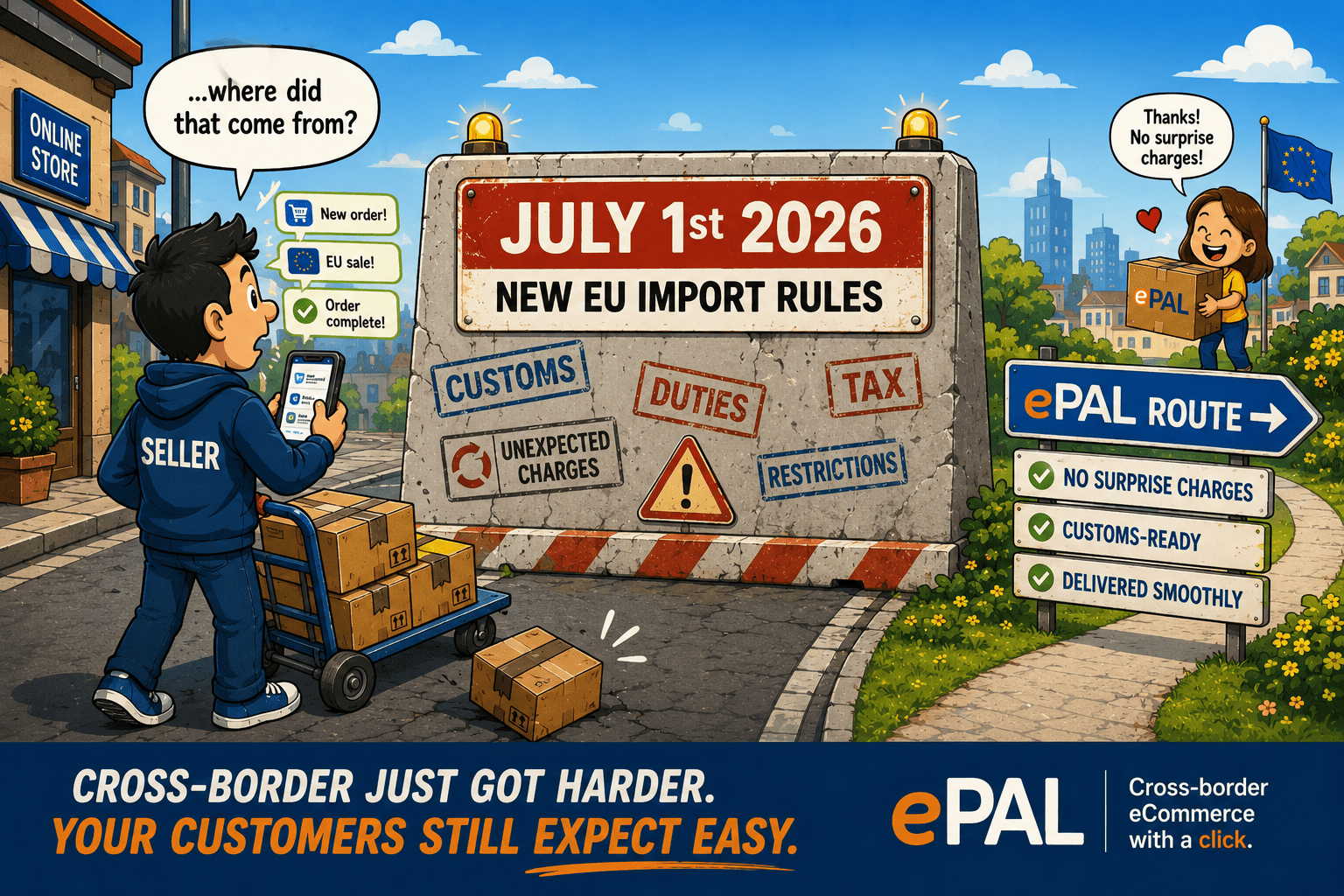
Some of this work starts before the parcel leaves. Transparent landed costs help customers understand what they are agreeing to pay. “No surprise charges at delivery” should be more than an ambition, considering a surprise charge at delivery (plus the ubiquitous carrier handling charges) can send the whole order into reverse.
Correct classification, traceable records and the Trade Intelligence behind them also help merchants understand the original calculation: what was charged, against which product and why – product by product, line by line. And even how much of the tax on shipping each of those products is “responsible” for, so the appropriate refund or adjustment can be checked. Those records can form part of the history needed to investigate a return, alongside the carrier’s declarations and evidence of export.
For ePAL’s clients and partners, returns support is an opportunity to extend that clarity through the return journey: link the original transaction to the returning goods, distinguish the amounts refunded to the customer from those potentially recoverable, and identify what evidence the relevant process needs. The original auditable transaction record gives you the starting point; the Customs declarations and evidence of the return complete the picture.
The objective is to make the merchant’s next step understandable, even when the rules require several steps, often sequenced to look like a drunk doing the tango. A good record of what happened is a much better starting point than shrugging the shoulders and reaching for the migraine tablets.
The serious bit: returns are a Trade Intelligence problem
Strip away the jokes (we’ll put them back in a moment) and cross-border returns come down to one question: can you prove what happened the first time the goods crossed the border? Which product, which classification, which origin, what duty and tax was charged, by whom and under which declaration.
That is Trade Intelligence. On the way out, it decides what the customer pays. On the way back, it decides what can be recovered, which reliefs apply and what evidence is needed. Without it, every refund question starts from scratch, which is exactly why so many merchants never ask it.
With it, a merchant can see which money is recoverable before deciding it isn’t worth the headache. Hurricane’s Trade Intelligence provides the classification, duty and tax data behind each line of the original transaction; ePAL links that record to the returning goods. Together, a return stops being a write-off and becomes a reconciliation.
When the jacket comes back, the transaction’s history comes back to life. Cross-border returns can reverse the sale and reverse the journey. Reversing the Customs and tax consequences takes its own work but – ending on a positive note – it can be financially very, very worthwhile.
Most checkouts calculate. ePAL optimises. Hurricane’s Trade Intelligence makes it recoverable.

About Hurricane Commerce. Hurricane Commerce is a global Trade Intelligence company. Hurricane provides the data, decisions, and automation that enable businesses to navigate complex regulatory environments with confidence. Clients include international carriers, postal operators, freight forwarders, e-commerce platforms, and brands operating across the world’s most demanding Customs environments. Contact: rod.talbot@hurricanecommerce.com
About ePAL Global. ePAL connects eCommerce checkout to the customer’s doorstep with no surprise charges at delivery. Landed cost, basket optimisation and DAP-to-DDP conversion for merchants, platforms and logistics providers, powered by Hurricane’s Trade Intelligence. Contact: ron@ePALGlobal.com